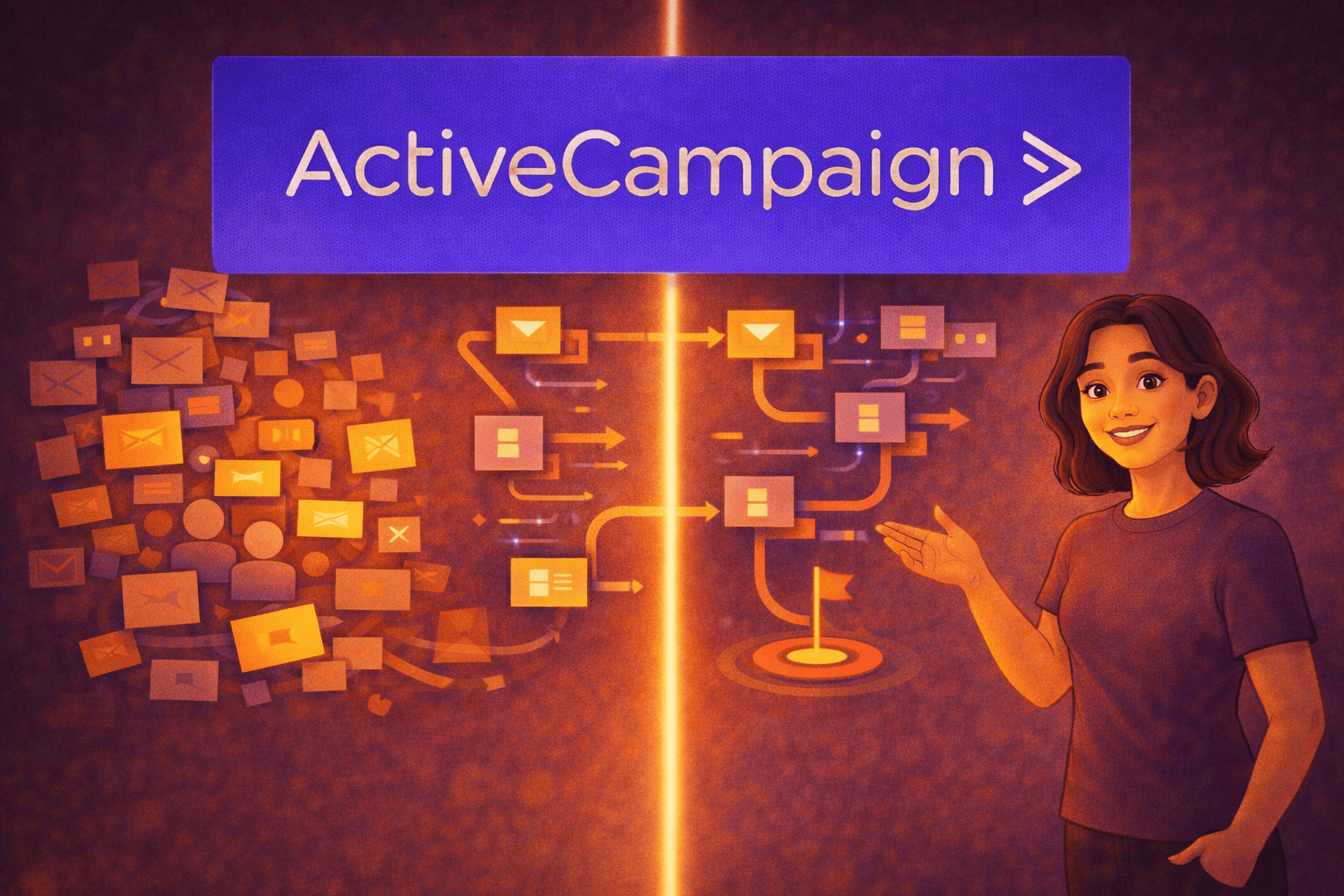
KlickTipp Email Marketing Strategically Framed from an Entrepreneur’s Perspective
KlickTipp email marketing is not a tool for everyone. This article helps you decide whether structure, effort, and objectives align in your business.


Email marketing is one of the few digital channels that has proven itself for more than 20 years.
Not because it is modern. But because it is controllable. You own the contact, define the timing, and decide how communication takes place. When you look into KlickTipp email marketing, you are therefore not searching for a feature list.
You want to know whether this system fits your company, whether it stabilizes your marketing or complicates it, and whether the required effort is in a reasonable relationship to the return. This is exactly where most experience reports fail. They explain what KlickTipp can do, but not when it makes sense. They describe functions, but not consequences. And they avoid the central question that matters to entrepreneurs.
That question is:
What requirements do you need to meet for KlickTipp to work, and at what point does it become a burden?
This article answers exactly that question. Without marketing language. Without glorifying the tool. From a clear entrepreneurial perspective.
Why KlickTipp is not a classic email tool

Many entrepreneurs approach KlickTipp with a simple expectation.
They want to send newsletters, build automated sequences, and segment their contacts more effectively. Technically, KlickTipp can do all of that. Strategically, however, this is only the surface. The real difference runs deeper.
KlickTipp does not primarily work with lists, but with states.
Contacts are not simply placed in a list, but exist within a logical system of tags, triggers, conditions, and consequences. This may sound abstract at first. In practice, however, it is the central point at which it becomes clear whether KlickTipp creates value or generates complexity.
Because this system forces you to think about marketing as a system, not as a sending process.
If you previously had unclear target groups, communicate multiple offers without clean separation, or maintain historically grown email lists without a clear logic, KlickTipp will not resolve these ambiguities. It will make them visible and amplify them.
KlickTipp is not the tool that creates order. It is the tool that reveals whether order exists.
The unspoken truth about KlickTipp

Why do opinions about KlickTipp diverge so widely?
Why do some entrepreneurs swear by it, while others quit in frustration?
The answer is uncomfortable, but clear.
KlickTipp does not produce neutral outcomes. It amplifies exactly what you feed into it.
Entrepreneurs who already have clearly defined offers, can cleanly separate their target groups, and understand marketing as a predictable process experience KlickTipp as leverage. As infrastructure. As a system that reduces work and creates control.
Entrepreneurs who expect order from the tool, postpone decisions, or treat marketing as a side activity experience KlickTipp as complicated, time-consuming, and confusing.
This is not because KlickTipp is complicated. It is because it does not disguise poor decisions.
Why KlickTipp is not a newsletter tool, but a logic system

To understand whether KlickTipp makes sense for your company, you have to think one level above tool features.
The decisive question is not whether you want to automate emails, but whether you can map decision logic.
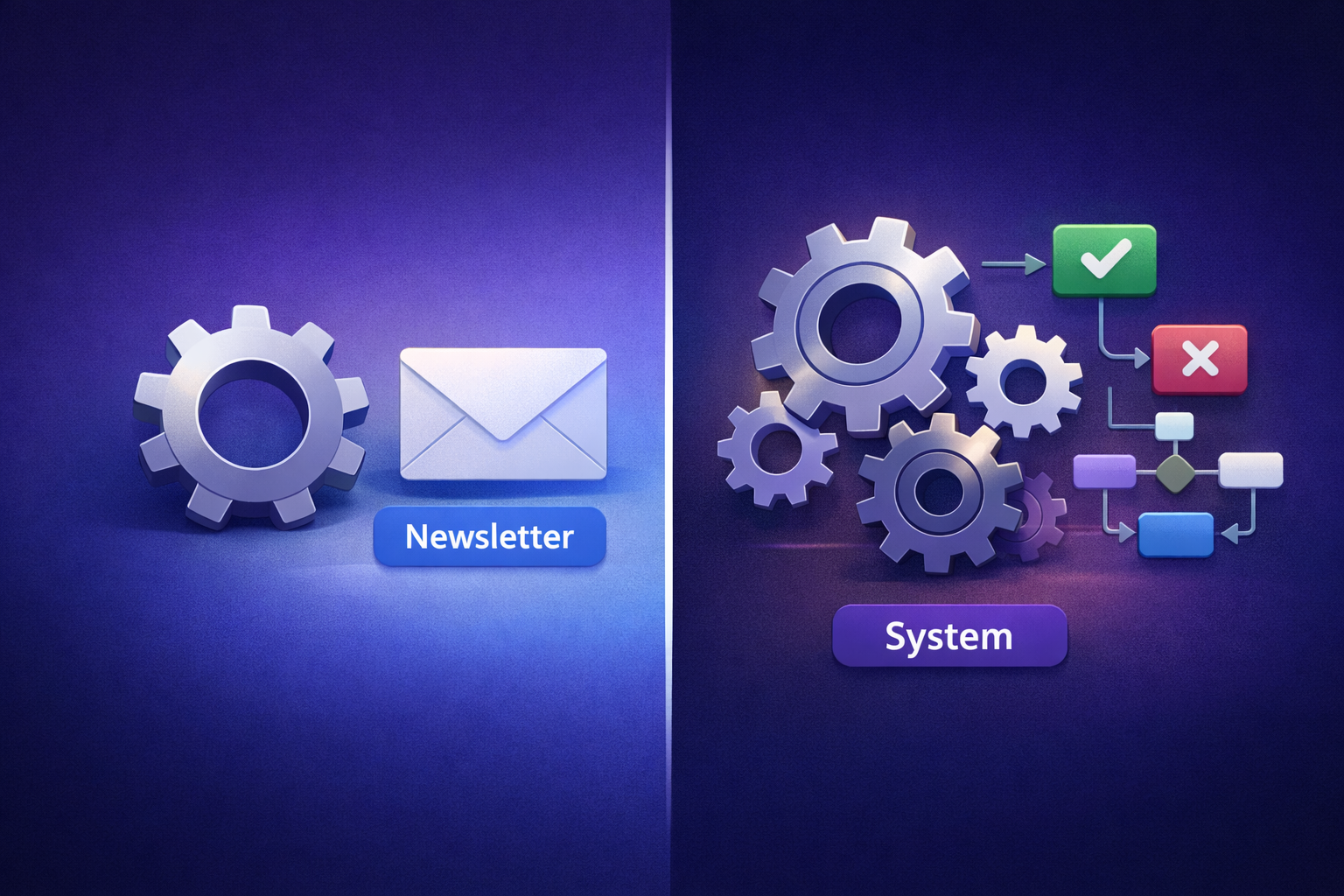
Classic newsletter tools work on a time-based model. Sign-up, email A, waiting period, email B. KlickTipp works on a behavior-based model. It responds to actions, not to the calendar.
This shifts the focus from sending to states. From action to consequence.
The greatest value therefore does not come from writing emails, but from clearly defining contact states.
Prospect, customer, active, inactive, informed, undecided. When these states are clearly defined, communication becomes situationally controllable for the first time. Not everyone receives everything anymore, but exactly what matches their current stage.
This form of communication makes entrepreneurial sense. It only works, however, when clarity exists.
The most common entrepreneurial questions about KlickTipp, honestly answered

Is KlickTipp suitable for small businesses?
Whether KlickTipp is suitable for small businesses depends less on size or revenue than on clarity.
What matters is whether positioning, offer, and target group are clearly defined.
Smaller businesses in particular can often use KlickTipp very efficiently, because decision logic and communication paths are still clear and manageable. The use becomes problematic primarily when structure is missing.
Tip: For more context on how KlickTipp compares to other systems and on the topic of email automation, take a look at this article: ActiveCampaign explained: features, automations, and use cases.
How high is the actual initial effort, really?
The initial effort required by KlickTipp is regularly underestimated. Not because something is concealed, but because the effort is not technical in nature, but cognitive.
Most of the work does not lie in writing emails or building automations. It lies in making decisions that were often avoided before.
You should honestly ask yourself the following questions:
- What states a contact can have?
- At what point someone is considered interested?
- When genuine purchase intent exists?
- Which actions signal real interest and which only curiosity?
- Which processes should deliberately not be automated?
As long as these questions remain unanswered, KlickTipp feels complex. Once they are clearly answered, the operational effort decreases significantly.
From an entrepreneurial perspective, the trade-off is clear:
- Initial conceptual effort
- Long-term, noticeable relief in day-to-day operations
Those who do not accept this relationship will perceive KlickTipp as oversized. Those who do accept it build a resilient marketing infrastructure.
Is KlickTipp GDPR-compliant or only technically prepared?
KlickTipp meets the technical requirements for GDPR-compliant email marketing.
These include:
- Double opt-in
- Logging of consents
- Data processing within the EU
However, one point is often overlooked: GDPR compliance is not a one-time tool state, but an ongoing process. Legal security does not depend on the system itself, but on how it is used.
In particular:
- Design of forms and consent texts
- Definition of retention periods
- Transparent data flows
- Clear access and permission concepts
Delegating GDPR responsibility to the tool shifts accountability. And that is entrepreneurial risk. KlickTipp can support you in working in a legally compliant way. It cannot replace your responsibility.
How complex does KlickTipp become over time?
KlickTipp becomes exactly as complex as it is built. No more. No less.
Problematic accounts almost always show the same patterns:
- Tags were created for short-term ideas and never cleaned up
- Automations were added but never questioned
- After a few months, no one can explain why certain emails are triggered
Complexity does not arise from many features, but from a lack of reduction.
A clean system is not defined by quantity, but by clarity.
The following rule will help you: If after three months no one can explain why a specific email is being sent, the setup has structurally failed.
When KlickTipp email marketing truly plays to its strengths

KlickTipp unfolds its value wherever communication does not immediately lead to a purchase decision. Likewise, wherever trust needs to be built, understanding developed, and decision-making processes accompanied.
This applies in particular to consultation-intensive services, educational offerings, agencies with positioning that requires explanation, and digital products with longer decision cycles.
In these contexts, KlickTipp enables communication that is oriented around the contact’s state. Content can deepen understanding, address objections, or prepare decisions without every interaction having to be managed manually.
Here, KlickTipp is not perceived as a sending tool, but as a communicative backbone. Marketing does not become faster, but more reliable.
When you should deliberately refrain from using KlickTipp
As powerful as KlickTipp is, its limits are just as clear. It is not a good choice when simplicity is the top priority and system thinking is deliberately avoided.
For companies that intentionally rely on simple sending logic, a classic system like Mailchimp may be the more strategically appropriate choice.
KlickTipp is not suitable if the goal is to send newsletters without segmentation logic, if quick results are expected without conceptual effort, or if there are no resources for maintenance and documentation.
In these cases, KlickTipp creates friction instead of efficiency. A simpler tool may be more sensible from an entrepreneurial perspective, even if it offers fewer possibilities.
Note: Not every powerful system is automatically the best choice.
Two typical development paths after six to twelve months of use
Scenario one: KlickTipp becomes core infrastructure
Companies that make clear decisions early experience KlickTipp as a stabilizing factor. States are clearly defined. Automations are understandable.
Maintenance effort remains manageable. Marketing becomes predictable.Automation creates relief because it is built on clarity.
Scenario two: KlickTipp becomes a permanent construction site
Companies that postpone decisions experience the opposite. Structures grow uncontrollably.
Changes are avoided. Complexity increases. Trust in the system declines. The difference between both scenarios does not lie in the tool, but in the decisions made during the first weeks.
The decisive question before using KlickTipp
Before implementing KlickTipp, you should conduct an honest self-assessment. For this purpose, we have created a compact decision checklist that helps you evaluate the most important prerequisites in a structured way.
If you are willing to define processes, document logic, and clearly assign responsibility, you will benefit from KlickTipp. If, however, you expect order without creating it conceptually, you will be disappointed.
Conclusion: What you can realistically expect from KlickTipp
KlickTipp is not a tool that removes work without first demanding clarity.
It forces you to make decisions. And that is precisely its strength. If you know whom you want to reach, what your offer delivers, and how you want to respond to user behavior, KlickTipp supports you very consistently. It amplifies what already exists. Structure becomes more efficient. Uncertainty becomes visible.
That is why KlickTipp polarizes. Not because it is complicated, but because it does not conceal uncertainty. For companies that are willing to consciously manage their communication, it is a highly effective tool. For everyone else, it quickly feels like resistance.
The decisive question is not whether KlickTipp “fits”, but whether you are ready to think about your marketing with clarity.